


Family vacations come with a stack of food decisions that most travelers do not think twice about. Airport gates, hotel buffets, all-inclusive resorts, gas-station pit stops, and restaurants in cities where nobody speaks English well. For travelers managing blood sugar, every one of those decisions has a downstream effect, and the work of planning starts well before anyone gets in the car. Traveling with diabetes is not a reason to skip vacation. It is a reason to plan a little more deliberately.
This guide covers the eating side of the trip — what to pack, what to ask, how to read a buffet, what to do about the time zones, and how to keep meals roughly consistent without making everyone else’s vacation revolve around a glucose monitor. The framing is informational and family-focused, the way many experienced travelers wish they had been told the first time they tried traveling with diabetes themselves.

 A Smart Guide to Traveling With Diabetes
Welcoming your family to a new destination is an incredible milestone, but it immediately introduces a complex layer of structural shifts to your typical daily routine. Prioritizing your health on the road ensures that these transitions remain manageable, turning the logistical hurdles of traveling with diabetes into a seamless, predictable part of your vacation framework.
Airport Food and the Carry-On Snack Strategy
Airports are designed for people who have time and nothing else to do with it. They are not designed for travelers whose next meal is three hours late, the salad counter has closed, and the only thing open near the gate is a pretzel cart. Anyone managing diabetes on the road tends to pack their own food rather than count on the terminal.
Standard public-health guidance on traveling with diabetes calls for keeping supplies and healthy snacks in a carry-on bag separate from checked luggage, plus packing at least double the medication a normal trip would require. The same principles extend to food. Pack twice what feels reasonable, keep it accessible, and do not rely on the terminal to provide it.
Practical carry-on foods that hold up through TSA and a long flight include small bags of nuts and seeds, individual nut butter packets, hard cheese, low-sodium jerky, whole-grain crackers, fresh fruit that bruises slowly like apples and oranges, and small protein bars chosen for fiber rather than sugar. None of these causes a spike in blood sugar the way a terminal pastry will, and most survive a six-hour delay.
The same instincts behind careful packing for family trips carry over to diabetes prep. The parent who already overpacks Band-Aids and backup chargers needs only to extend the habit to glucose tablets, backup snacks, an insulated medication kit, and a printed copy of the prescription in case anything goes missing en route.

 Hotel Breakfast Buffets and All-Inclusive Resort Dining
Buffets reward the disciplined and punish the underslept. After a red-eye, the buffet looks like one giant decision, and most travelers grab whatever is at eye level. Travelers with diabetes do better when they walk the entire buffet first, identify the protein and fiber options, then plate intentionally rather than reactively.
Protein-first plating is the simplest rule. Eggs cooked to order, plain Greek yogurt, smoked salmon, cottage cheese, sliced ham. These stabilize the rest of the meal before any carbs enter the picture. Then fiber: berries, sliced melon, tomato slices, and raw vegetables in a side bowl. Carbs come last and in measured portions — one slice of whole-grain bread, half a small bowl of oatmeal, a single piece of fruit. The point is not to eliminate carbs but to anchor them with protein and fiber, which slows the glucose response.
The math gets harder at all-inclusive family resorts, where the food is unlimited, the day is long, and the typical schedule runs on snacks and cocktails between meals. Travelers managing diabetes at a resort tend to do better when they set a daily food plan in the morning — what breakfast looks like, when lunch is, what the dinner reservation is, what the pool snack will be — rather than letting the buffet make the decisions hour by hour.
 Road Trip Snacks That Travel Well
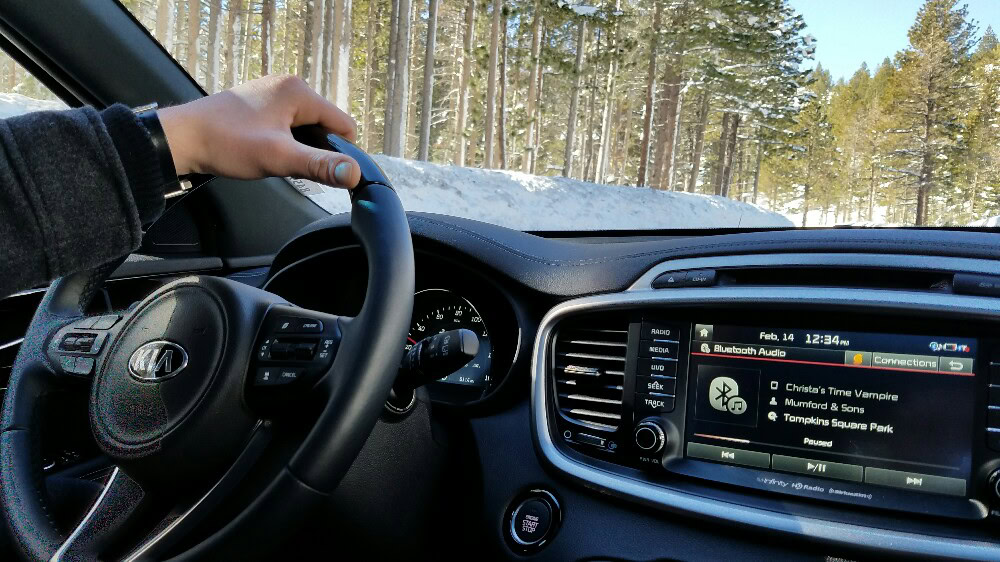
Road trips are friendlier to diabetes management than flights because the cooler comes along. A small soft-sided cooler in the back seat holds far better food than anything available at a highway rest stop, and the trick is to plan the cooler before leaving rather than at the gas station.
A good travel cooler for a family with a diabetic traveler typically holds hard-boiled eggs, string cheese, single-serve hummus cups with carrot or celery sticks, plain Greek yogurt, sliced bell peppers, portioned grapes (the sugar adds up faster than most people expect), small cans of low-sodium tuna or chicken, and a couple of avocados with a knife and a small lemon for splitting at a rest area. Avocado is a particularly road-friendly food because it travels intact, satisfies, and contributes almost no carbs per serving.
Water, not soda, is the road default for anyone managing blood sugar. Caffeine in moderation is fine, but the sugar load of a single fountain soft drink can derail a careful morning of eating. A refillable insulated bottle refilled at every stop solves most of that problem and keeps everyone in the car better hydrated than the average road trip would.
Ordering Restaurant Meals Abroad
Restaurants present two problems for a traveler with diabetes: hidden carbs and unpredictable portions. The hidden carbs are sauces, glazes, breading, and the syrups in dressings. The portions, depending on the country, can be either much larger or much smaller than the traveler is used to. A short list of server questions handles most of it.
A few that work across most cuisines: Is there sugar added to the sauce? What is in the breading? Can the rice come as a half portion? Can the dressing come on the side? Can the bread arrive at the end of the meal rather than the beginning? None of these are unusual asks, and most servers handle them without comment. In countries where the traveler does not speak the language well, a printed translation card in a wallet covers the same questions in advance.
Ordering protein and vegetables first, then deciding on the starch, mirrors the buffet rule and works in any restaurant in any country. So does asking for water before any other drink, which gives the meal a moment of buffer before decisions start landing.

 Carb Counting on the Move
Most travelers with diabetes practice some form of carb counting at home. The skill does not change on vacation, but the variables do. Restaurant portions are estimates. Foreign packaging may list grams per 100 grams instead of per serving. Buffet items have no labels at all. Travelers benefit from leaning on a few foods whose carb profile is reliable and consistent across locations.
The skill of carb counting for diabetes management sits at the center of most travel eating plans, and one of the most useful low-carb anchor foods on the road is the avocado. One-third of a medium avocado has roughly four grams of carbohydrate, the majority of it fiber, and contributes no sugar to a meal. Travel breakfasts built around avocado on whole-grain toast, or avocado-stuffed eggs at a buffet, give a high-fat, high-fiber base that anchors the rest of the day’s eating.
Other reliable anchors include a palm-sized portion of any cooked protein, leafy greens in any preparation, a half-cup of beans or lentils, and full-fat plain yogurt. None of these requires a label to estimate, and the carb counts hold roughly steady across countries, which is what carb counting on the move actually rewards.
Meal Timing Across Time Zones
Crossing two or more time zones disrupts both meal schedule and medication timing. The combination is what causes most blood-sugar problems on long-haul trips, and the standard guidance from clinicians is to plan the adjustment before leaving rather than figure it out in the air.
Clinical guidance on insulin management during air travel lays out the basic approach. Travelers crossing east into earlier time zones may need to shorten the interval between doses, while travelers heading west into later time zones may need to lengthen it. The exact pattern depends on the regimen, which is why the conversation belongs with the prescribing clinician at least a week before the trip rather than at the gate.
The food side mirrors the medication side. Meals on the destination’s schedule, not the home schedule, help the body’s clock catch up. A protein-heavy meal on the first morning at the new time zone, even when the body is craving sleep instead of food, helps reset the day’s eating rhythm. Skipping meals on long-haul flights tends to backfire because the next meal becomes oversized, the carb load spikes, and recovery takes longer than the flight itself.
Conclusion
Traveling with diabetes is one of the most rewarding activities a family can do together. The work is front-loaded: a conversation with the clinician, a packed cooler, a printed translation card, a short list of server questions, and a rough plan for the first few meals at the new destination. Once those pieces are in place, the actual trip can run as smoothly as any other vacation, often with more attention to where and what the family is eating, which is rarely a bad thing.
The eating part of traveling with diabetes is not really about restriction. It is about substitution and rhythm. Protein first, fiber second, carbs measured. Anchor foods the family already trusts, packed before the trip starts. A daily plan that the buffet does not get to override. Most travelers find that after one or two trips, the system becomes automatic, and the vacation goes back to being about the vacation rather than the food.
The point of all of it is to make the trip feel like a vacation, not a medical project. With a little structure and the right snacks in the car, families managing diabetes can eat well on the road, enjoy the dinner reservations and the resort buffet alongside everyone else, and come home with the same memories the rest of the family is bringing back.

